Can Babies Sense Their Fathers in the Womb?
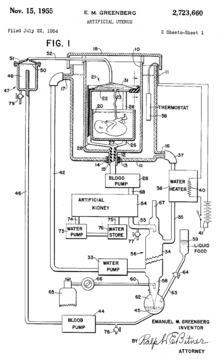 |

Figure from a 2017 Nature Communications newspaper describing an extra-uterine life support system, or "biobag", used to grow lamb fetuses.[1]
An artificial uterus or artificial womb is a device that would let for extracorporeal pregnancy[ii] by growing a fetus outside the trunk of an organism that would ordinarily acquit the fetus to term.
An artificial uterus, as a replacement organ, would take many applications. It could exist used to assist male or female couples in the development of a fetus.[ii] This tin can potentially be performed as a switch from a natural uterus to an bogus uterus, thereby moving the threshold of fetal viability to a much earlier stage of pregnancy.[ii] In this sense, it can be regarded every bit a neonatal incubator with very extended functions. It could also be used for the initiation of fetal evolution.[ii] An artificial uterus could also help make fetal surgery procedures at an early stage an option instead of having to postpone them until term of pregnancy.[two]
In 2016, scientists published ii studies regarding homo embryos developing for thirteen days inside an ecto-uterine surround.[3] [four] Currently, a xiv-day rule prevents human embryos from being kept in bogus wombs longer than fourteen days. This rule has been codified into law in twelve countries.[5]
In 2017, fetal researchers at the Children's Hospital of Philadelphia published a study showing they had grown premature lamb fetuses for four weeks in an actress-uterine life support system.[i] [6] [vii]
Components [edit]
An artificial uterus, sometimes referred to as an 'exowomb[eight]', would have to provide nutrients and oxygen to nurture a fetus, also every bit dispose of waste material. The scope of an bogus uterus (or "artificial uterus system" to emphasize a broader telescopic) may also include the interface serving the function otherwise provided by the placenta, an amniotic tank functioning every bit the amniotic sac, as well as an umbilical cord.
Nutrition, oxygen supply and waste disposal [edit]
A adult female may still supply nutrients and dispose of waste products if the artificial uterus is connected to her.[two] She may also provide immune protection against diseases by passing of IgG antibodies to the embryo or fetus.[2]
Bogus supply and disposal accept the potential advantage of allowing the fetus to develop in an environment that is not influenced by the presence of disease, environmental pollutants, alcohol, or drugs which a homo may have in the circulatory system.[2] There is no gamble of an immune reaction towards the embryo or fetus that could otherwise arise from insufficient gestational immune tolerance.[2] Some private functions of an artificial supplier and disposer include:
- Waste disposal may be performed through dialysis.[2]
- For oxygenation of the embryo or fetus, and removal of carbon dioxide, extracorporeal membrane oxygenation (ECMO) is a functioning technique, having successfully kept goat fetuses alive for up to 237 hours in amniotic tanks.[9] ECMO is currently a technique used in selected neonatal intensive care units to treat term infants with selected medical problems that result in the infant's inability to survive through gas commutation using the lungs.[10] Notwithstanding, the cerebral vasculature and germinal matrix are poorly developed in fetuses, and subsequently, at that place is an unacceptably high take a chance for intraventricular hemorrhage (IVH) if administering ECMO at a gestational age less than 32 weeks.[xi] Liquid ventilation has been suggested as an culling method of oxygenation, or at least providing an intermediate stage between the womb and breathing in open air.[2]
- For artificial nutrition, electric current techniques are problematic.[2] Total parenteral diet, as studied on infants with severe short bowel syndrome, has a 5-twelvemonth survival of approximately twenty%.[2] [12]
- Bug related to hormonal stability also remain to exist addressed.[2]
Theoretically, animal suppliers and disposers may be used, but when involving an animal's uterus the technique may rather exist in the scope of interspecific pregnancy.[ original inquiry? ]
Uterine wall [edit]
In a normal uterus, the myometrium of the uterine wall functions to expel the fetus at the end of a pregnancy, and the endometrium plays a office in forming the placenta. An artificial uterus may include components of equivalent office. Methods have been considered to connect an artificial placenta and other "inner" components direct to an external circulation.[2]
Interface (artificial placenta) [edit]
An interface betwixt the supplier and the embryo or fetus may be entirely artificial, eastward.g. by using 1 or more semipermeable membranes such as is used in extracorporeal membrane oxygenation (ECMO).[9]
In that location is likewise potential to abound a placenta using human endometrial cells. In 2002, it was announced that tissue samples from cultured endometrial cells removed from a man donor had successfully grown.[xiii] [14] The tissue sample was then engineered to form the shape of a natural uterus, and homo embryos were and so implanted into the tissue. The embryos correctly implanted into the artificial uterus' lining and started to grow. However, the experiments were halted later on six days to stay within the permitted legal limits of in vitro fertilisation (IVF) legislation in the United States.[2]
A human placenta may theoretically be transplanted inside an artificial uterus, but the passage of nutrients across this bogus uterus remains an unsolved issue.[two]
Amniotic tank (artificial amniotic sac) [edit]
The primary function of an amniotic tank would be to fill up the function of the amniotic sac in physically protecting the embryo or fetus, optimally allowing it to move freely. It should besides be able to maintain an optimal temperature. Lactated Ringer'south solution can be used equally a substitute for amniotic fluid.[ix]
Umbilical cord [edit]
Theoretically, in case of premature removal of the fetus from the natural uterus, the natural umbilical string could exist used, kept open either by medical inhibition of physiological occlusion, by anti-coagulation as well as by stenting or creating a bypass for sustaining blood flow between the mother and fetus.[2]
Research and development [edit]
Emanuel 1000. Greenberg [edit]
Emanuel M. Greenberg wrote various papers on the topic of the artificial womb and its potential use in the hereafter.[ citation needed ]
On 22 July 1954 Emanuel M. Greenberg filed a patent on the design for an artificial womb.[15] The patent included 2 images of the design for an artificial womb. The design itself included a tank to place the fetus filled with amniotic fluid, a machine connecting to the umbilical cord, blood pumps, an artificial kidney, and a water heater. He was granted the patent on 15 November 1955.[15]
On 11 May 1960, Greenberg wrote to the editors of the American Journal of Obstetrics and Gynecology. Greenberg claimed that the journal had published the article "Attempts to Make an 'Artificial Uterus'", which failed to include any citations on the topic of the artificial uterus.[ citation needed ] Co-ordinate to Greenberg, this suggested that the idea of the artificial uterus was a new one although he himself had published several papers on the topic.[ citation needed ]
Juntendo University in Tokyo [edit]
In 1996, Juntendo University in Tokyo developed the extra-uterine fetal incubation (EUFI).[sixteen] The project was led by Yoshinori Kuwabara, who was interested in the evolution of young newborns. The organisation was developed using fourteen caprine animal fetuses that were then placed into artificial amniotic fluid nether the aforementioned conditions of a mother caprine animal.[xvi] [17] Kuwabara and his team succeeded in keeping the caprine animal fetuses in the system for iii weeks.[16] [17] The organization, however, ran into several issues and was not ready for human being testing.[16] Kuwabara remained hopeful that the system would exist improved and would after exist used on human being fetuses.[16] [17]
Children'southward Infirmary of Philadelphia [edit]
In 2017, researchers at the Children's Infirmary of Philadelphia were able to farther develop the actress-uterine system. The study uses fetal lambs which are then placed in a plastic pocketbook filled with artificial amniotic fluid.[1] [vii] The organization consist in 3 master components: a pumpless arteriovenous circuit, a closed sterile fluid environs and an umbilical vascular access. Regarding the pumpless arteriovenous circuit, the blood flow is driven exclusively by the fetal heart, combined with a very depression resistance oxygenator to most closely mimic the normal fetal/placental circulation. The closed sterile fluid surround is important to ensure sterility. Scientists developed a technique for umbilical cord vessel cannulation that maintains a length of native umbilical string (5–10 cm) betwixt the cannula tips and the abdominal wall, to minimize decannulation events and the risk of mechanical obstruction.[xviii] The umbilical string of the lambs are attached to a machine outside of the pocketbook designed to act similar a placenta and provide oxygen and nutrients and also remove whatsoever waste.[1] [7] The researchers kept the machine "in a dark, warm room where researchers tin can play the sounds of the mother's eye for the lamb fetus."[seven] The organization succeeded in helping the premature lamb fetuses develop normally for a month.[7] Indeed, scientists accept run eight lambs with maintenance of stable levels of circuit flow equivalent to the normal period to the placenta. Specifically, they have run 5 fetuses from 105 to 108 days of gestation for 25–28 days, and 3 fetuses from 115 to 120 days of gestation for xx–28 days. The longest runs were terminated at 28 days due to animal protocol limitations rather than any instability, suggesting that back up of these early on gestational animals could exist maintained beyond 4 weeks.[18] Alan Scrap, a fetal surgeon at the Children's Hospital of Philadelphia hopes to move testing to premature human being fetuses, but this could have anywhere from three to five years to become a reality.[7] Bit, who led the written report, calls the possibility of their technology recreating a full pregnancy a "pipe dream at this point" and does not personally intend to create the technology to do and then.[7]
Eindhoven University of Technology (NL) [edit]
Since 2016, researchers of TU/eastward and partners aim to develop an artificial womb, which is an adequate substitute for the protective environment of the maternal womb in case of premature birth, preventing health complications. The artificial womb and placenta will provide a natural surroundings for the baby with the goal to ease the transition to newborn life. The perinatal life support (PLS) organisation volition exist developed using breakthrough applied science: a manikin will mimic the infant during testing and grooming, avant-garde monitoring and computational modeling will provide clinical guidance.[nineteen]
The consortium of 3 European universities working on the project consists out of Aachen, Milaan and Eindhoven. In 2019 this consortium was granted a subsidy of 3 million euro, and a 2nd grant of 10 One thousand is in progress. Together, the PLS partners provide joint medical, applied science, and mathematical expertise to develop and validate the Perinatal Life Support system using breakthrough simulation technologies. The interdisciplinary consortium will push button the evolution of these technologies frontward and combine them to establish the offset ex vivo fetal maturation organization for clinical use. This project, coordinated by the Eindhoven Academy of Technology brings together world-leading experts in obstetrics, neonatology, industrial blueprint, mathematical modelling, ex vivo organ support, and non-invasive fetal monitoring. This consortium is led by professor Frans van de Vosse and Professor and doctor Guid Oei. in 2020 the spin off Juno Perinatal Healthcare has been set up upwardly by engineers Jasmijn Kok and Lyla Kok, assuring valorisation of the research done. More information nearly the spin off tin exist found here;[xx]
More than information nearly the projection of the technical universities and its researchers can exist plant here:[21]
Philosophical considerations [edit]
Bioethics [edit]
The development of artificial uteri and ectogenesis raises bioethical and legal considerations, and as well has important implications for reproductive rights and the abortion debate.
Bogus uteri may expand the range of fetal viability, raising questions almost the function that fetal viability plays within abortion law. Within severance theory, for case, ballgame rights only include the correct to remove the fetus, and practice not always extend to the termination of the fetus. If transferring the fetus from a woman's womb to an artificial uterus is possible, the selection to terminate a pregnancy in this way could provide an alternative to aborting the fetus.[22] [23]
In that location are also theoretical concerns that children who develop in an artificial uterus may lack "some essential bail with their mothers that other children have".[24]
Gender equality and LGBT [edit]
In the 1970 book The Dialectic of Sex, feminist Shulamith Firestone wrote that differences in biological reproductive roles are a source of gender inequality. Firestone singled out pregnancy and childbirth, making the statement that an artificial womb would free "women from the tyranny of their reproductive biology."[25] [26]
Arathi Prasad argues in her column on The Guardian in her article "How bogus wombs will modify our ideas of gender, family unit and equality" that "It will [...] give men an essential tool to have a kid entirely without a woman, should they choose. It will inquire u.s. to question concepts of gender and parenthood." She furthermore argues for the benefits for aforementioned-sex couples: "It might as well mean that the divide betwixt mother and father tin can exist dispensed with: a womb outside a adult female's torso would serve women, trans women and male aforementioned-sex couples as without prejudice."[27]
Encounter also [edit]
- Amniotic fluid
- Apheresis
- Brave New Earth
- Ectogenesis
- Embryo space colonization
- Extracorporeal membrane oxygenation
- Hemodialysis
- In vitro fertilisation
- Male person pregnancy
- Postgenderism
- Tissue engineering
References [edit]
- ^ a b c d Partridge, Emily A.; Davey, Marcus M.; Hornick, Matthew A.; McGovern, Patrick East.; Mejaddam, Ali Y.; Vrecenak, Jesse D.; Mesas-Burgos, Carmen; Olive, Aliza; Caskey, Robert C.; Weiland, Theodore R.; Han, Jiancheng; Schupper, Alexander J.; Connelly, James T.; Dysart, Kevin C.; Rychik, Jack; Hedrick, Holly L.; Peranteau, William H.; Fleck, Alan W. (25 April 2017). "An extra-uterine system to physiologically support the extreme premature lamb". Nature Communications. 8: 15112. Bibcode:2017NatCo...815112P. doi:ten.1038/ncomms15112. PMC5414058. PMID 28440792.
 Text was copied from this source, which is bachelor under a Artistic Commons Attribution 4.0 International License.
 - ^ a b c d eastward f g h i j thou l m north o p q r Bulletti, C.; Palagiano, A.; Footstep, C.; Cerni, A.; Borini, A.; De Ziegler, D. (2011). "The artificial womb". Annals of the New York Academy of Sciences. 1221 (ane): 124–128. Bibcode:2011NYASA1221..124B. doi:10.1111/j.1749-6632.2011.05999.x. PMID 21401640. S2CID 30872357.
- ^ Shahbazi, M. North., Jedrusik, A., Vuoristo, Due south., Recher, One thousand., Hupalowska, A., Bolton, V., … Zernicka-Goetz, G. (2016). Self-organization of the human embryo in the absence of maternal tissues. Nature Cell Biology, 18, 700. Retrieved from http://dx.doi.org/x.1038/ncb3347
- ^ Deglincerti, A., Croft, G. F., Pietila, L. N., Zernicka-Goetz, M., Siggia, Eastward. D., & Brivanlou, A. H. (2016). Self-system of the in vitro attached human embryo. Nature, 533, 251. Retrieved from http://dx.doi.org/10.1038/nature17948
- ^ Morber, Jenny (26 Apr 2017). "Should Nosotros Written report Human being Embryos Across 14 Days?". PBS Socal . Retrieved 23 Baronial 2018.
- ^ Philadelphia, The Children's Infirmary of (28 February 2017). "A Unique Womb-Like Device Could Reduce Bloodshed and Disability for Extremely Premature Babies". www.chop.edu.
- ^ a b c d e f thou "Scientists Create Bogus Womb That Could Help Prematurely Built-in Babies". NPR.org.
- ^ "Top Transhuman Web Sites". Archived from the original on 27 November 2006.
- ^ a b c Sakata M; Hisano K; Okada M; Yasufuku One thousand (May 1998). "A new artificial placenta with a centrifugal pump: long-term total extrauterine support of caprine animal fetuses". J. Thorac. Cardiovasc. Surg. 115 (5): 1023–31. doi:ten.1016/s0022-5223(98)70401-5. PMID 9605071.
- ^ Bautista-Hernandez, V.; Thiagarajan, R. R.; Fynn-Thompson, F.; Rajagopal, S. Thou.; Nento, D. E.; Yarlagadda, V.; Teele, S. A.; Allan, C. Yard.; Emani, S. One thousand.; Laussen, P. C.; Pigula, F. A.; Bacha, Eastward. A. (2009). "Preoperative Extracorporeal Membrane Oxygenation equally a Bridge to Cardiac Surgery in Children with Congenital Heart Disease". The Annals of Thoracic Surgery. 88 (4): 1306–1311. doi:x.1016/j.athoracsur.2009.06.074. PMC4249921. PMID 19766826.
- ^ Alan H. Jobe (August 2004). "Post-conceptional age and IVH in ECMO patients". The Journal of Pediatrics. 145 (two): A2. doi:10.1016/j.jpeds.2004.07.010.
- ^ Spencer AU; et al. (September 2005). "Pediatric short bowel syndrome: redefining predictors of success". Ann. Surg. 242 (3): 403–9, discussion 409–12. doi:10.1097/01.sla.0000179647.24046.03. PMC1357748. PMID 16135926. (mean follow-up time was v.1 years)
- ^ "Ronald O. Perelman and Claudia Cohen Eye for Reproductive Medicine | Weill Cornell Medicine". ivf.org.
- ^ "Weill Cornell Research".
- ^ a b Artificial uterus, 15 Nov 1955, retrieved vii May 2018
- ^ a b c d e Klass, Perri (29 September 1996). "The Artificial Womb Is Built-in". The New York Times. ISSN 0362-4331. Retrieved seven May 2018.
- ^ a b c Kuwabara, Yoshinori; Okai, Takashi; Imanishi, Yukio; Muronosono, Etsuo; Kozuma, Shiro; Takeda, Satoru; Baba, Kazunori; Mizuno, Masahiko (June 1987). "Development of Extrauterine Fetal Incubation Organization Using Extracorporeal Membrane Oxygenator". Artificial Organs. xi (3): 224–227. doi:10.1111/j.1525-1594.1987.tb02663.ten. ISSN 0160-564X. PMID 3619696.
- ^ a b E. Partridge, M. Davey1 An extra-uterine organisation to physiologically support the farthermost premature lamb. Nature communications 2017
- ^ "Dwelling - Perinatal Life Support".
- ^ "Home | Juno Perinatal Healthcare".
- ^ "Bogus womb".
- ^ Randall, Vernellia; Randall, Tshaka C. (22 March 2008). "Congenital in Obsolescence: The Coming End to the Ballgame Contend". doi:ten.2139/ssrn.1112367. S2CID 57105464.
- ^ Chessen, Matt. "Artificial Wombs Could Outlaw Abortion". Mattlesnake.com. Archived from the original on 12 October 2019. Retrieved 2 Nov 2014.
- ^ Smajdor, Anna (Summer 2007). "The Moral Imperative for Ectogenesis" (PDF). Cambridge Quarterly of Healthcare Ideals. 16 (3): 336–45. doi:10.1017/s0963180107070405. PMID 17695628. S2CID 36754378. Archived from the original (PDF) on 11 September 2013.
- ^ Chemaly, Soraya (23 February 2012). "What Practise Artificial Wombs Hateful for Women?". RH Reality Cheque.
- ^ Rosen, Christine (2003). "Why Not Artificial Wombs?" (PDF). The New Atlantis. Archived from the original (PDF) on 1 August 2014.
- ^ "How artificial wombs volition change our ideas of gender, family and equality". The Guardian. 1 May 2017. ISSN 0261-3077. Retrieved sixteen June 2017.
Further reading [edit]
- Coleman, Stephen (2004). The Ideals Of Bogus Uteruses: Implications For Reproduction And Abortion. Burlington, VT: Ashgate Pub. ISBN978-0-7546-5051-5.
- Scott Gelfand, ed. (2006). Ectogenesis: Artificial Womb Applied science and the Future of Human being Reproduction. Amsterdam [u.a.]: Rodopi. ISBN978-ninety-420-2081-viii.
Source: https://en.wikipedia.org/wiki/Artificial_womb
0 Response to "Can Babies Sense Their Fathers in the Womb?"
Postar um comentário